Mark Bamberger
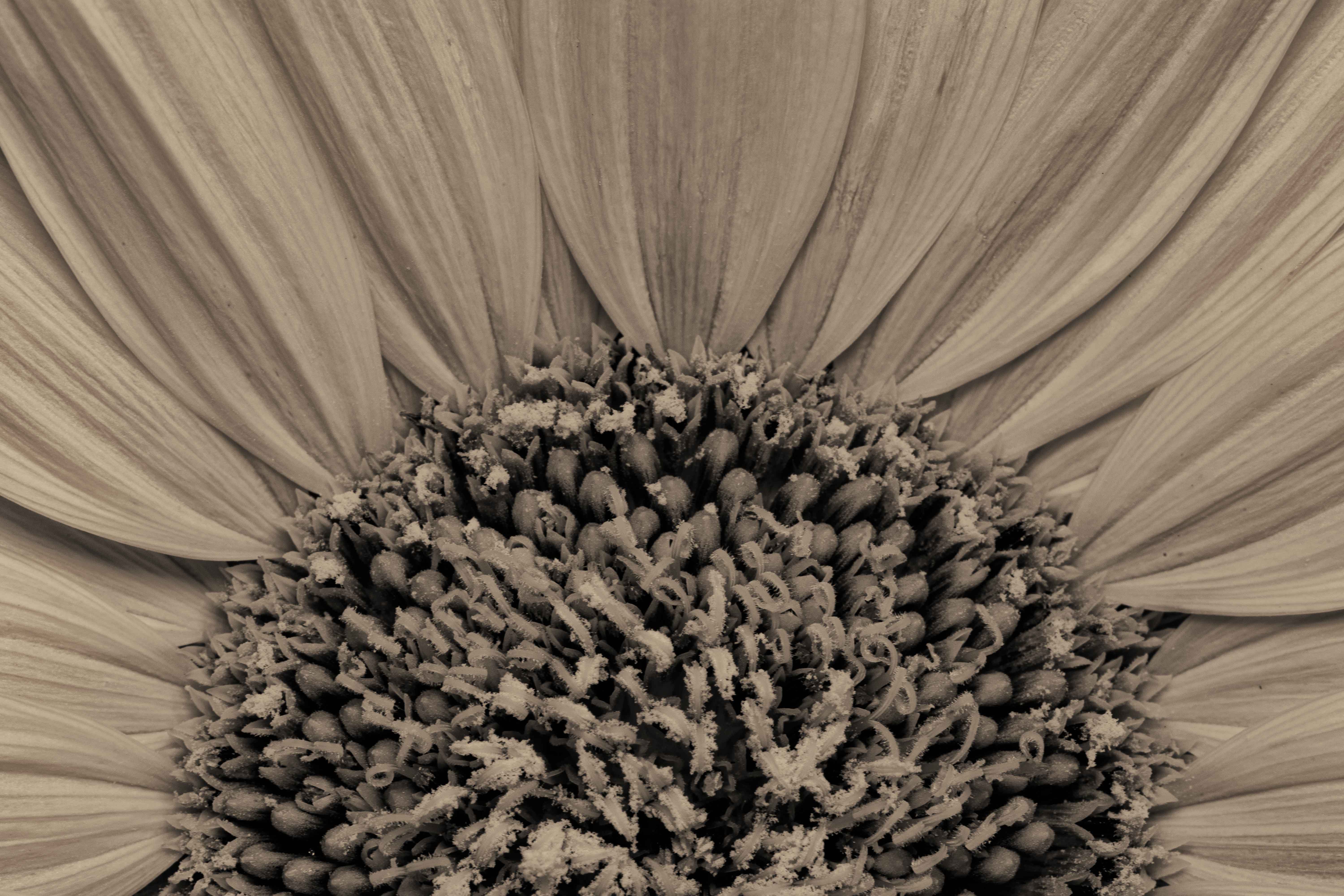
October 2026 - Sunflower in Pollination
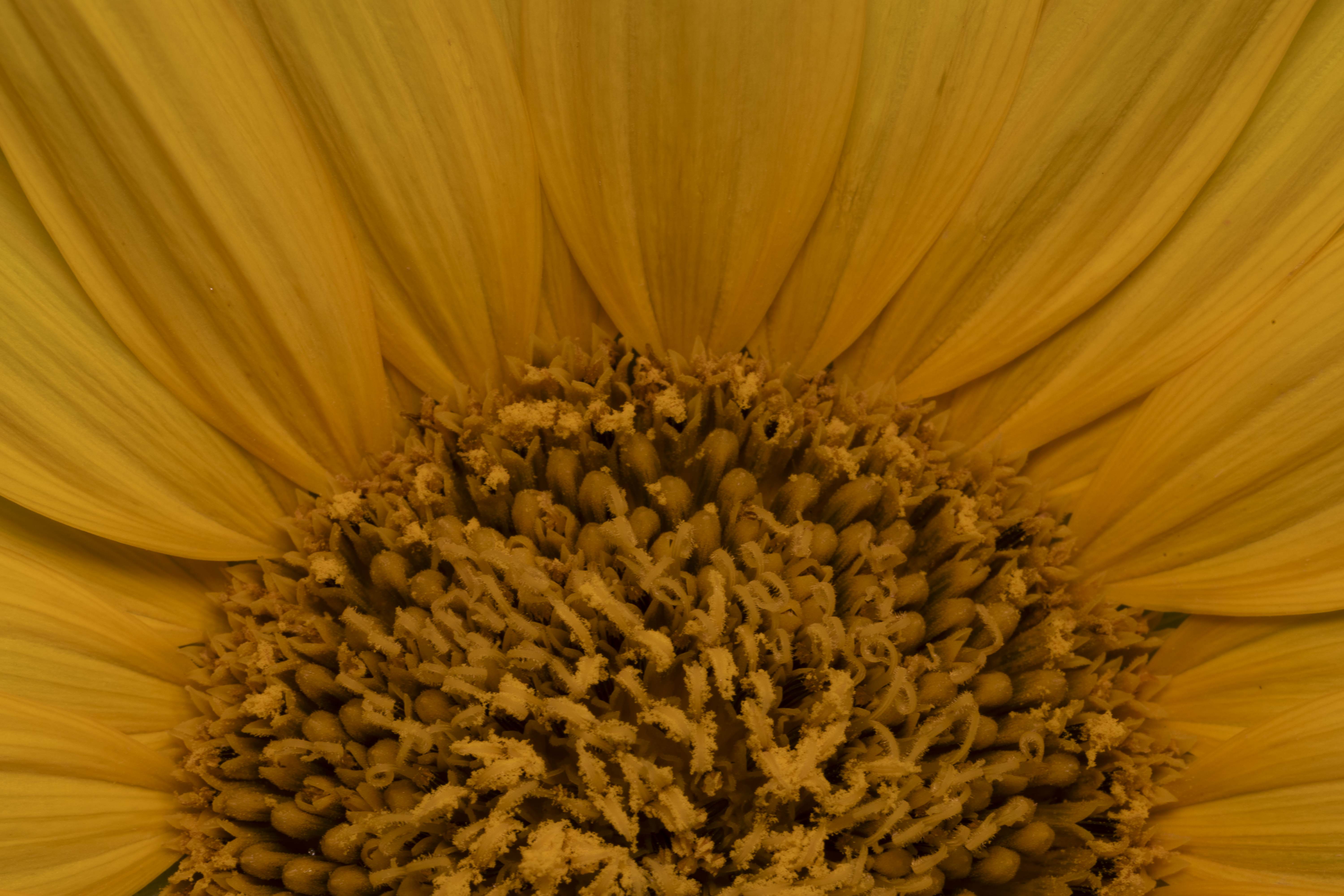
Original
About the Image(s)
A sunflower in the midst of pollination taken, using a tripod with my 100 mm macro lens, f/18, 2 sec., ISO 100. Converted and edited in LrC with a slight tint monochrome.
6 comments posted
Hi Mark! I personally prefer to see the whole flower center and less petals if the point of taking this image was to focus on the details and textures of pollination. I don't feel like longer sections of the petals are necessary except maybe if there were flecks of pollen on them.
On my computer, the image seems a little soft, so maybe some sharpening is needed? Maybe f18 is adding some diffraction. Granted, I'm going to get cataract surgery later today, so it could be just my eyes! Posted: 10/05/2026 13:36:46
On my computer, the image seems a little soft, so maybe some sharpening is needed? Maybe f18 is adding some diffraction. Granted, I'm going to get cataract surgery later today, so it could be just my eyes! Posted: 10/05/2026 13:36:46
With an aperture of f/18 and a 2-second exposure, there is likely some diffraction and motion blur causing the image to be a bit blurry. I'm not keen on the slight tint and would prefer a pure B&W image, but that's purely a personal choice. I ran your original image through Lightroom and Photoshop to convert the image to B&W and added some tweaks in Topaz Labs' Photo to sharpen the image and fix the motion blur. Posted: 10/08/2026 20:47:37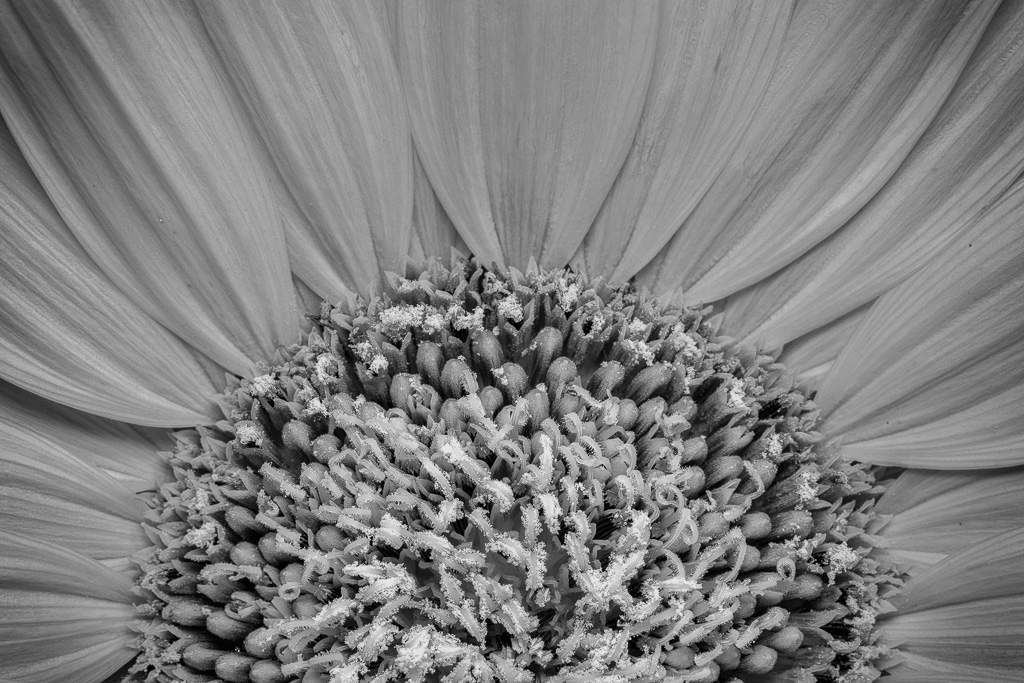
Thanks David, I like your changes. I couldn't decide between the pure B&W and monochrome. I should have looked a bit closer and taken it into Topaz. Thanks again. Posted: 10/09/2026 11:45:29
I agree with David on this. I don't care for the tint. I don't think you need f-18 in a flower that's so flat. That much DOF is not needed. Posted: 10/16/2026 01:01:47
Hi Mark, I like the composition and the detail in the flower, and I also like the sunflower's colours. If I were to create a different look for the flower, I would probably convert it to black and white rather than use a sepia tone. I also agree that, you wouldn't need to stop down your aperture as far as f/18. An aperture of f/11 or f/14 would be enough to capture all the detail while helping to avoid diffraction. Posted: 10/23/2026 13:04:53
Kim Kowalewski
The only thing I can add is that you might try a high-key processing which I think would show the grittiness of the pollination. Posted: 10/27/2026 20:28:36